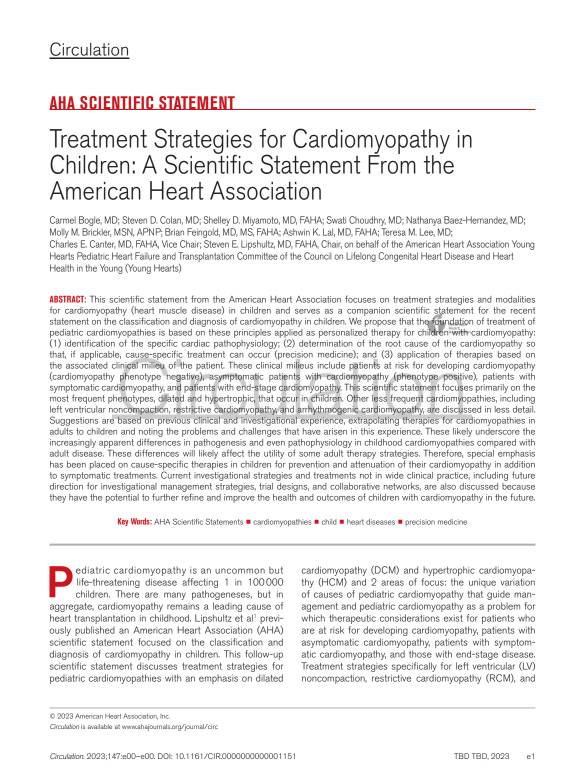




for cardiomyopathy (heart muscle disease) in children and serves as a companion scientiffc statement for the recent
statement on the classiffcation and diagnosis of cardiomyopathy in children. We propose that the foundation of treatment of
pediatric cardiomyopathies is based on these principles applied as personalized therapy for children with cardiomyopathy:
(1) identiffcation of the speciffc cardiac pathophysiology; (2) determination of the root cause of the cardiomyopathy so
that, if applicable, cause-speciffc treatment can occur (precision medicine); and (3) application of therapies based on
the associated clinical milieu of the patient. These clinical milieus include patients at risk for developing cardiomyopathy
(cardiomyopathy phenotype negative), asymptomatic patients with cardiomyopathy (phenotype positive), patients with
symptomatic cardiomyopathy, and patients with end-stage cardiomyopathy. This scientiffc statement focuses primarily on the
most frequent phenotypes, dilated and hypertrophic, that occur in children. Other less frequent cardiomyopathies, including
left ventricular noncompaction, restrictive cardiomyopathy, and arrhythmogenic cardiomyopathy, are discussed in less detail.
Suggestions are based on previous clinical and investigational experience, extrapolating therapies for cardiomyopathies in
adults to children and noting the problems and challenges that have arisen in this experience. These likely underscore the
increasingly apparent differences in pathogenesis and even pathophysiology in childhood cardiomyopathies compared with
adult disease. These differences will likely affect the utility of some adult therapy strategies. Therefore, special emphasis
has been placed on cause-speciffc therapies in children for prevention and attenuation of their cardiomyopathy in addition
to symptomatic treatments. Current investigational strategies and treatments not in wide clinical practice, including future
direction for investigational management strategies, trial designs, and collaborative networks, are also discussed because
they have the potential to further reffne and improve the health and outcomes of children with cardiomyopathy in the future.



暂无评论内容